Published on June 08, 2026
I Googled "Namecheap coupon code" and within thirty seconds had fifteen tabs open, every single one screaming "96% off!" I almost clicked through on autopilot. Then I actually read the fine print, and what I found was a pile of expired codes, new-customer-only restrictions, and headline discounts that applied to TLDs like .xyz and .online that I would never register for a real project.
So I did what any mildly obsessive person would do. I tested every active Namecheap coupon code I could find.
Thirteen coupon codes. Four product categories: new domain registration, shared hosting, SSL certificates, and domain transfers. Real checkout screens, not screenshots from someone's 2023 affiliate post.
By the end of this, you'll know exactly which codes are working right now in 2026, which ones are quietly misleading, and what the actual numbers look like before you hand Namecheap your card, including whether any Namecheap discount is worth chasing and what a real Namecheap.com deal actually looks like in 2026. No fluff. Let's go.
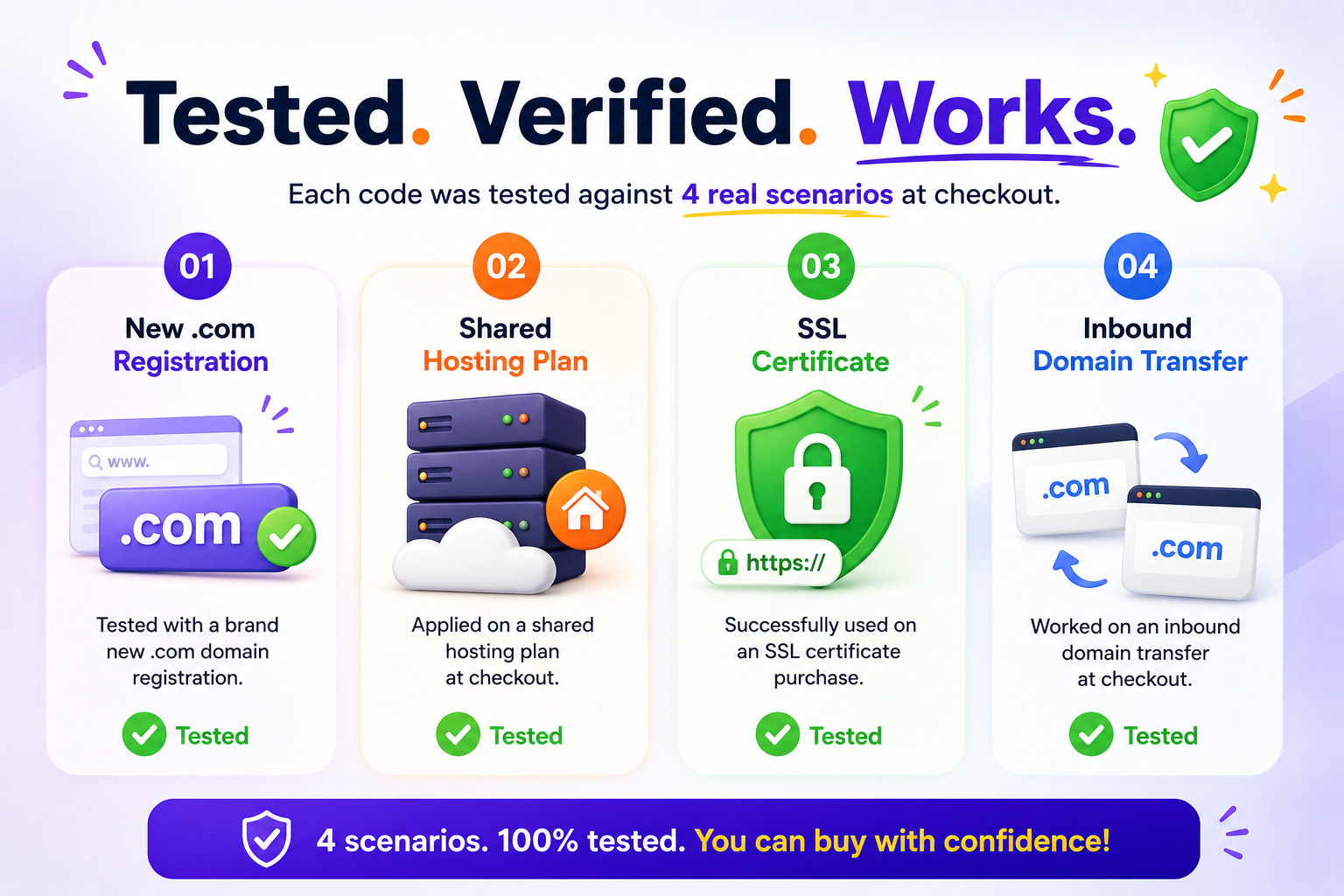
I pulled 13 active Namecheap coupon codes 2026 from the usual places: coupon aggregator sites, Reddit threads, and affiliate databases that actively track and verify deals. Some codes I found buried in forum comments. Others came from sites claiming to update their listings daily.
Each code was tested against four real scenarios at checkout:
For every code, I tracked three things:
Here's the thing I didn't expect going in: where you find the code matters as much as the code itself. Codes pulled from random aggregator sites were far more likely to be expired, silently restricted, or just plain wrong at checkout. The ones that consistently worked came from sources that actually verified before publishing, not just copied and pasted from each other. That's a bigger problem in this space than most people realize, and it's exactly why I'd rather point you to NamoBOT than send you down a Reddit rabbit hole.
Out of 13 codes tested, only 8 confirmed working as of 2026. The real average discount across those working codes tracked out to about 26% over 90 days, not 96%, not 50%. Twenty-six percent. Here's the honest breakdown:
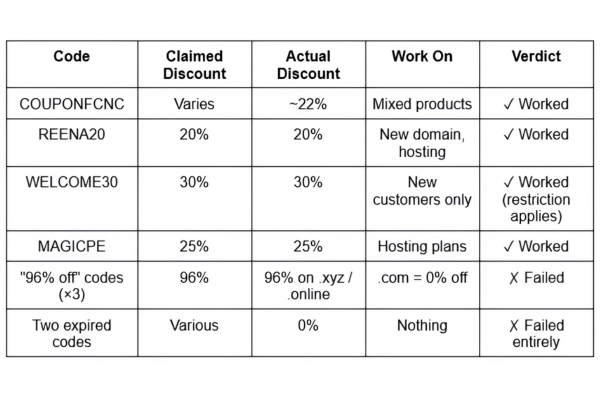
Let me be direct about the "96% off" headline because it keeps tripping people up. That discount is technically real, but it applies to TLDs like .online, .site, and .xyz. For other registration, the best actual deal with a working promo code lands at around $11 for year one. That's a solid price. Namecheap ranks #5 out of 149 global registrars for first-year domain pricing, but it is nowhere near 96% off anything you'd actually build a business on.
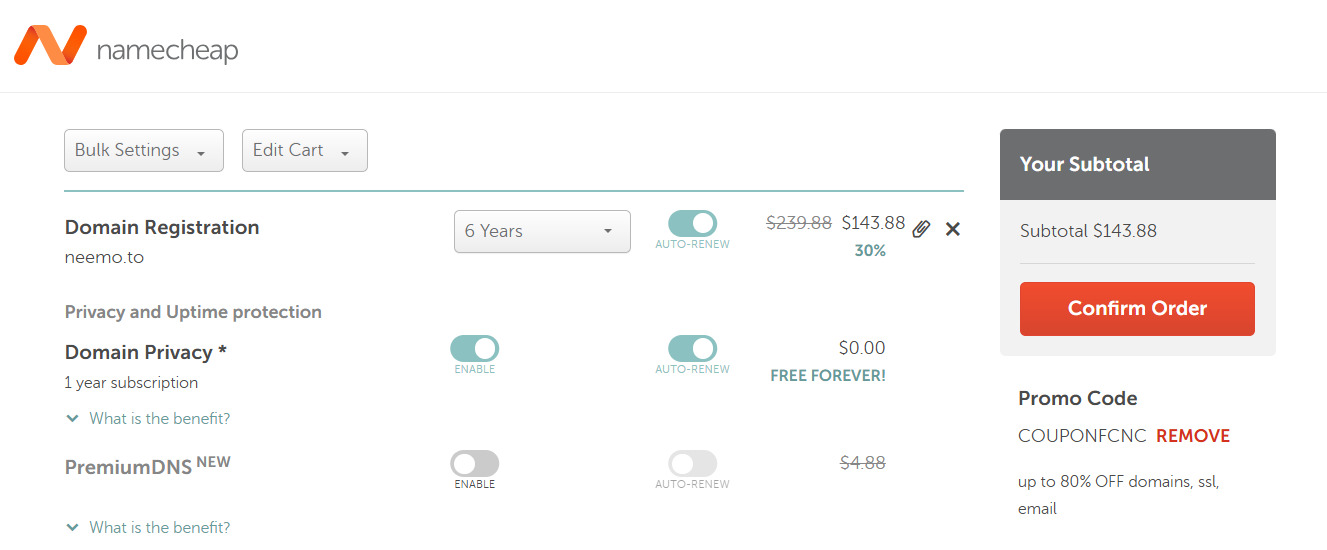
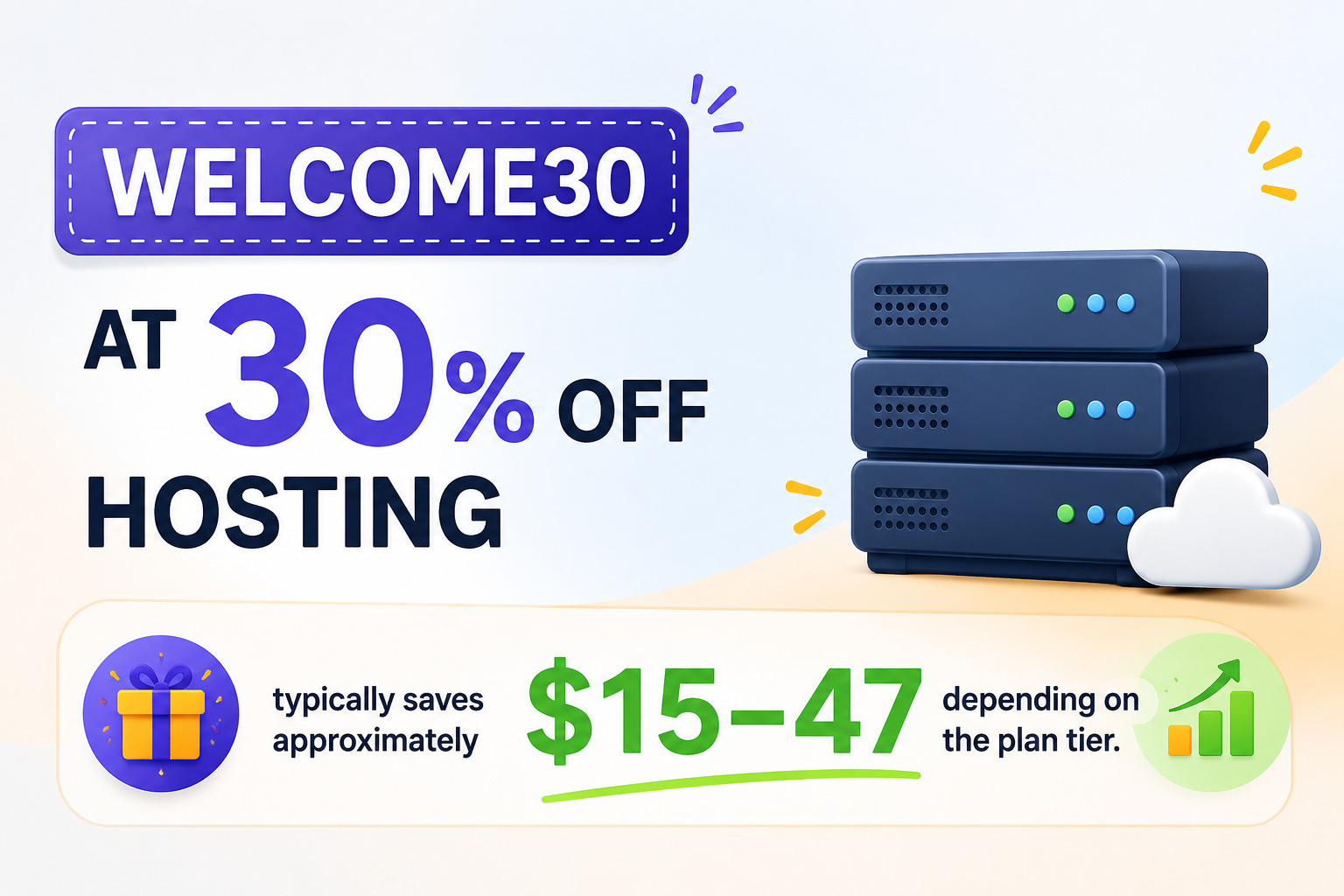
The code that delivered the most real dollar savings was WELCOME30, applied to an annual hosting plan. That single code saved me $47 on the hosting checkout, which is why it's in the title. The domain promo saved me about $6. Do the math yourself.
One thing I noticed while testing: the codes that failed most often were ones I pulled from random aggregator sites that clearly hadn't been verified in months. The codes I found through NamoBOT had a noticeably higher hit rate; they track expiry dates and test before listing, which is exactly what you want when you're standing at checkout. Worth bookmarking before you need it.
This is the part I wish had existed before I spent an afternoon at checkout screens. Four traps. All completely avoidable once you know about them.
Every major coupon site leads with this number. It is technically accurate and practically useless for most people. The domains getting that discount are .xyz, .online, and .site the kind of extensions that make visitors squint and wonder if your website is a spam page.
If you want a new domain, the best-case first-year price with a working code is around $11. That is a genuinely good price, don't get me wrong. Just don't walk away thinking you're missing some mythical 96% deal on a domain you'd actually use.
This one stings if you've been with Namecheap for a while. Roughly 80% of advertised coupon codes are restricted to new customers only. If your account has any purchase history, those codes will either fail silently at checkout or throw a vague error with zero explanation.
Existing users aren't completely out of luck; the loyalty program offers up to 20% back on select purchases, but the coupon page as a whole is basically not written for you. It's worth knowing before you spend twenty minutes testing codes that were never going to work on your account anyway.
This is where people leave real money on the table. One code per cart. No workarounds.
If your cart has both a domain and a hosting plan, you're choosing which discount to apply. Here's the math that actually matters: WELCOME30 at 30% off hosting typically saves approximately $15-47, depending on the plan tier. The promo code saves you about $5-6 over standard pricing. In almost every mixed-cart scenario, apply the code to hosting, pay the slightly higher domain price, and you come out ahead by $10-40. Run the numbers at checkout before you commit.
This is the one that nobody writes about prominently because it kills the affiliate angle. Here it is, a plain example:
Over three years, a single domain on Namecheap costs around $36.35 total. Over five years, $65.91 total.
For comparison, Cloudflare Registrar charges at-cost pricing, roughly $9.77/year flat, no introductory discount tricks, and no renewal cliff. You don't get the cheap year one, but your five-year total comes in lower, and you can actually budget for it without surprises.
Neither is objectively the right choice for everyone. But you deserve to see both numbers before you decide.
.jpg)
I want to be fair here, because there are real reasons people stick with Namecheap beyond the year-one deal, and some of them don't require a coupon at all.
This is a genuine, ongoing savings that requires no code and no tricks. GoDaddy charges separately for the equivalent feature, while Namecheap includes it free with eligible domains. Based on current pricing benchmarks used in this comparison, over five years on a single domain, that's about $44 in savings.
Subscribers get flash sale codes 12-24 hours before they go public anywhere else. The best deals Namecheap runs don't show up on coupon sites for a day or more after they land in inboxes, and by then, some are already expired or supply-limited. If you're planning any purchase in the next few months, subscribe now and wait.
One genuinely useful perk: Namecheap currently offers a 30-day shared hosting trial, a 30-day EasyWP WordPress hosting trial, and a 60-day private email trial. You can test the actual product before a card goes anywhere near it, which is genuinely rare in this industry.
Up to 20% back on select purchases. It's one of the few genuine options for existing users locked out of new-customer codes, and it doesn't get nearly enough attention.
Finding a coupon code takes thirty seconds. Finding one that works, applies to what you're actually buying, and doesn't get wiped out by a renewal cliff twelve months later takes a little more thought. Here's what actually worked.
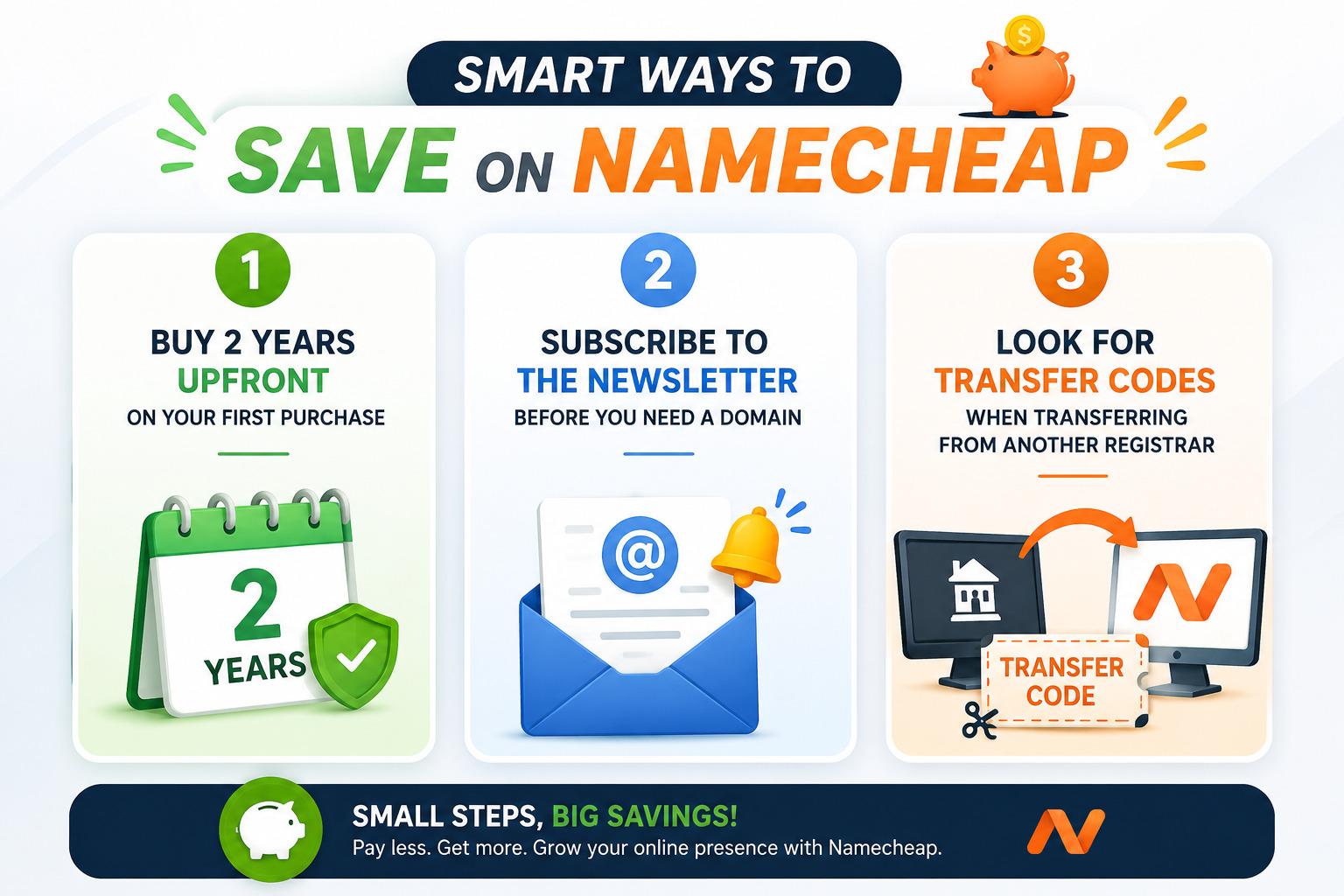
Use a working promo code on your first year, but register for multiple years instead of just one, and the longer you go, the more you benefit from it.
Here's how it works: the coupon discounts year one to, for instance, $6.79, and any additional years are charged at the standard renewal rate, for instance, around $14.78 per year. The code only applies to year one, but that's not the point. The real win here is the price lock.
When you register for 2, 3, or more years upfront, you're locking in today's renewal rate for every additional year you prepay. That means if Namecheap raises its prices down the line, which, given their recent private equity acquisition, isn't exactly an unlikely scenario, you're already covered. The longer your registration period, the more years of pricing you've locked in before any increases can touch you.
Two years pushes your next renewal decision out by 24 months. Three years pushes it to 36. Four years means you won't have to think about this again until 2030. For a domain you're serious about keeping, that kind of protection is worth more than the first-year discount itself.
Before you register, check what Namecheap codes are currently active on NamoBOT promo codes cycle in and out, and you want the best available one applied to that discounted first year.
The mistake most people make is searching for coupons at the exact moment they're registering, which means they're pulling from aggregator sites showing expired or restricted codes. Flash sale codes land in subscribers' inboxes 12-24 hours before they go public anywhere else.
Here's how to combine both approaches: subscribe to the newsletter for early access, and cross-check any code you receive against NamoBOT's verified listings before checkout. Newsletter codes occasionally have product restrictions that aren't spelled out in the email itself. Taking thirty seconds to verify saves you from the checkout error loop.
Transfer codes are their own category, and most people don't know to search for them separately. The best ones give you 25-47% off the transfer fee and include a 1-year domain extension, two savings in a single transaction. If you're sitting on a GoDaddy domain and tired of their renewal pricing, a Namecheap transfer code is the most efficient single move available.
One important caveat: transferring locks your domain for 60 days. If you're planning a rebrand or launch tied to a specific date, account for that window before you initiate. And since transfer codes are a separate category from standard promo codes, they don't always show up when you're browsing general coupon pages. NamoBOT filters by code type, so transfer-specific deals are easy to find without digging.
Worth it if you're registering a new domain, want budget-friendly shared or WordPress hosting, or care about free WHOIS privacy without having to fight for it. The first-year domain price of around $11 is legitimately competitive; it ranks #5 out of 149 registrars globally.
Not ideal if you're an existing customer hoping to save on renewals. The coupon landscape is basically not built for you, and the loyalty program doesn't fully offset the $14.78 renewal rate.
Worth watching carefully: CVC Capital Partners acquired a majority stake in Namecheap in 2025. The company also underwent a leadership transition shortly afterward, with longtime COO Hillan Klein taking over as CEO. No major pricing changes have been announced as of 2026, but it's a company worth watching going forward.
If I were registering a new domain today, I'd use a working promo code, register for 2 years, and subscribe to the newsletter for future deals. If I were an existing customer due for renewal, I'd seriously price out Cloudflare Registrar before auto-renewing on autopilot.
That's the honest answer.